


At the time, I had no idea how magical my childhood was, or how fortunate a child I was. Not because I grew up surrounded by wealth and riches, far from it; but because I grew up surrounded by books. My parents were voracious readers and the highlight of my week was Wednesday evening, when I would go with my father to the local library, a cavernous Victorian Gothic building, and be let loose for an hour or two. He would always disappear into the transport or history sections; I would make a beeline for fantasy.
By the time I hit my teens I had worked my way through the usual suspects—from C.S. Lewis and J.R.R. Tolkien to the vastly underrated Alan Garner, who by setting his myths in real world locations re-enchanted the English landscape of Cheshire in the way that Tolkien re-enchanted language.
Then came the day when I stumbled across a copy of T. H. White’s wild and wonderful (and occasionally wacky) retelling of the Arthurian stories, The Once and Future King and the world of older myths opened up to me. I can still remember the sheer thrill when I was fifteen of visiting Glastonbury and coming home with a copy of Thomas Malory’s Le Morte d’Arthur.
If manners maketh the man, as the saying goes, I think that books maketh the child and I am hugely grateful that my imagination was thoroughly baptised in stories throughout my formative years. It’s probably one reason why as an adult I have found that the most compelling arguments for Christianity are those that point to our deepest desires for meaning, purpose, beauty, and goodness.
I’m also reminded of something that C. S. Lewis once said, namely that we should regularly read old books and old stories, because we need a counterpoint to our current moment, a window through which we can gaze upon another age—and in so doing, see our own more clearly. Given that we cannot see into the future, we can look to the past—because although our ancestors made mistakes, they made different mistakes to the ones we are currently engaged in.
But there is something deeper, too, namely that myths, legends, and fairy stories aren’t just for children; they’re not easy escapism, quite the opposite. The reason why the oldest stories have been passed down and retold for centuries, millennia even, is because they tell us truths that we are in danger of forgetting at our peril. Truths about ourselves, about the world, and about the deepest meanings that lie behind it.
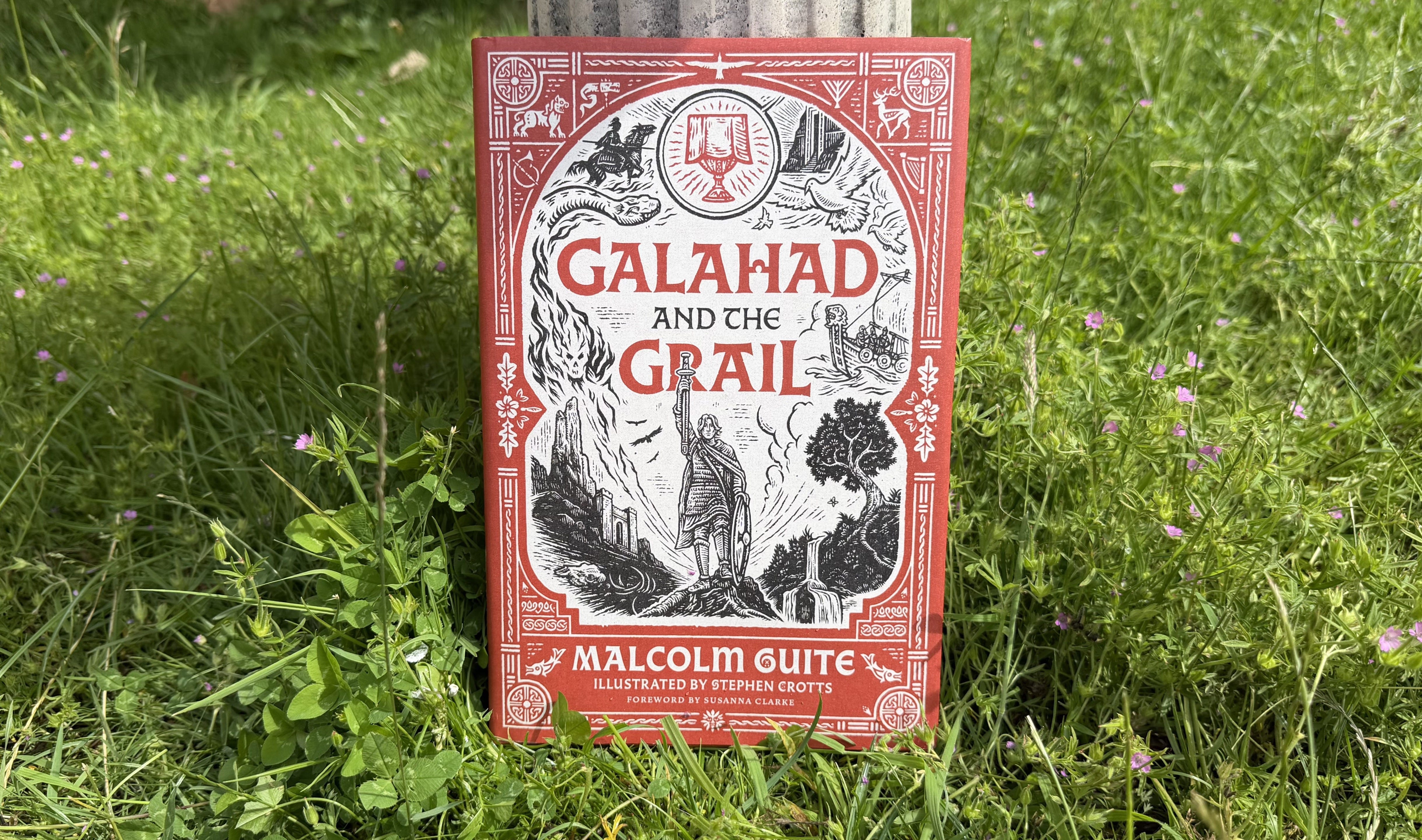
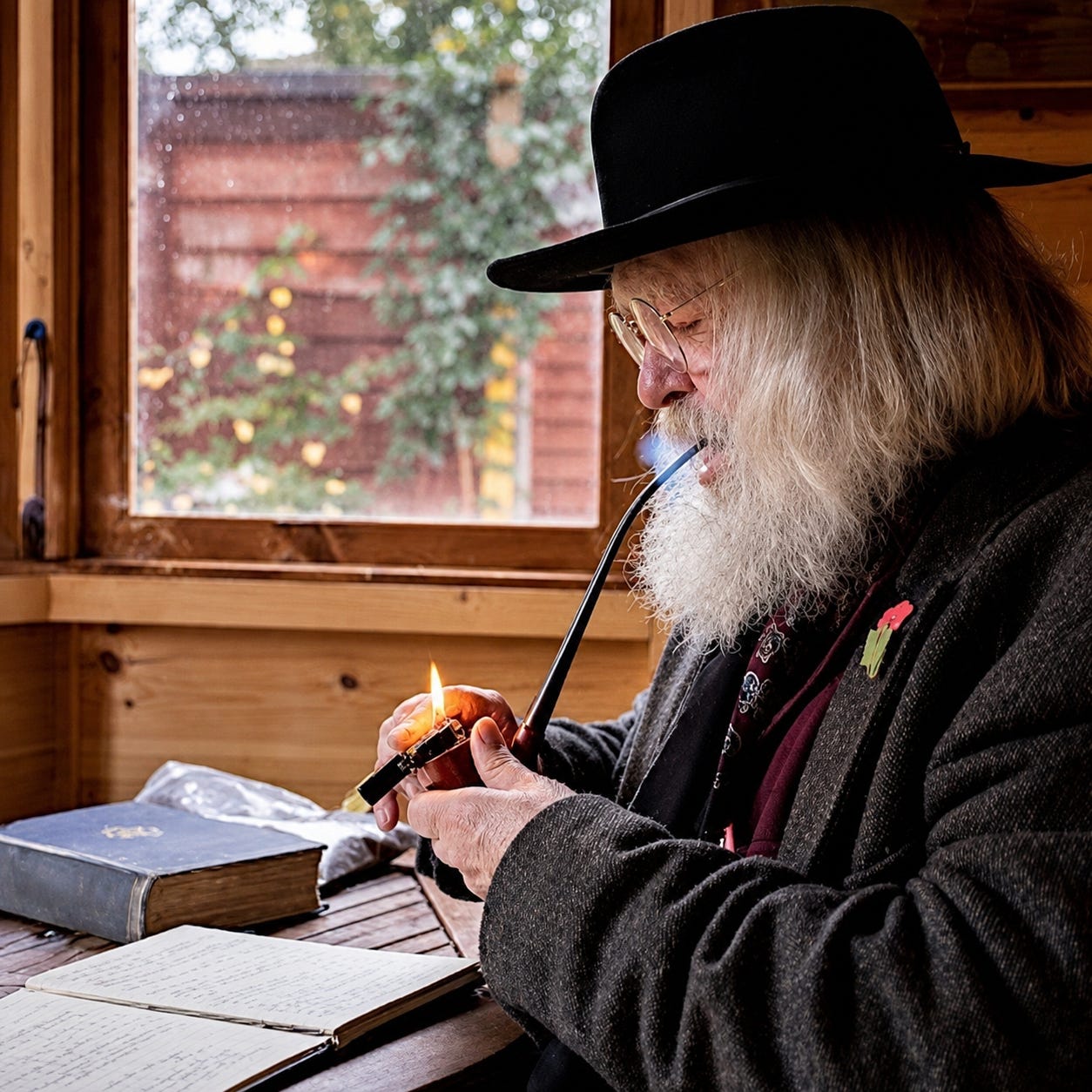
All of which brings me, by a long and winding road, to Malcolm Guite’s Galahad and the Grail, the first of a planned four-book epic retelling, in ballad form, of the Arthur stories. If you haven’t yet discovered Malcolm, he is a gifted poet and writer who has also elevated eccentricity to an art form. Indeed, he looks the very part of the medieval wandering minstrel, with a beard that has its own postcode and a pipe constantly in place. His plan is for his “Arthuriad” to be the culmination of a life’s work helping people rediscover the beauty of words, poetry, and story.
And the Arthur story is ripe for retelling because it has in many ways been lost. Not lost as in ‘down the back of the sofa’ but lost as in buried behind Hollywood action movie stereotypes, cheesy merchandising and, well, the less said about Monty Python and the Holy Grail (much as I laughed), the better. The real Arthur stories—wild, dangerous, mysterious, and above all, ancient—have been lost behind all of that cultural clutter.
That loss has been compounded by other things, too. First, the fact that in the West we don’t know what to do with myth (the very word has simply become a synonym for ‘not true’). We’ve become thorough-going materialists, the sword of meaning forever buried in the stone of scientism, and the idea that there might be a bigger story to reality than just that told by physics has been disenchanted out of us.
But then, second, the Arthur story lost its power when it became de-Christianised; partly because of a secularisation that didn’t want even the hint of a divine foot in the door, but ironically also because Christians became suspicious of anything that smelt even remotely of paganism.
Malcolm Guite has no time for either of those dead-ends and Galahad and the Grail is his magnificent riposte to both of them. First, because he’s wisely seen that story is a powerful way to point people to the vital idea that we live in a world infused with meaning. (And once you realise this, that naturally leads to questions like “who put that meaning there?”) Indeed, as I read Galahad and the Grail I heard those words of C. S. Lewis echoing in my mind:
Reason is the natural organ of truth; but imagination is the organ of meaning.1
While when it comes to the Christian-ness (if we might call it that) of these stories, Malcolm writes, in the appendix to Galahad and the Grail:
The stories that first moved me were not some sanitised Hollywood version, but the real thing: haunting, numinous, continuously suggestive of the holy and beautiful reality of God and His saints and angels shimmering through the fabric of the stories of the knights with all their aspirations and all their human flaws. At the heart of those early versions of the stories is the Holy Grail itself: the presence of Christ and His gospel, moving as an unbearably beautiful light through the mists and magic of pre-Christian Celtic Britain, drawing even the wizards and the faery folk towards Himself, baptising the imagination of our ancestors, fulfilling and disclosing the true meaning of our earliest stories.2
But the power of Galahad and the Grail comes not just from the story that it retells, it also comes from the form in which Malcolm has chosen to cast that story; namely poetic English ballad.
When I first heard of the book I confess that this aspect caused me to ignore it for a while. I’d long said things like “I don’t do poetry”, probably due to being beaten around the head with poetry as a schoolboy and made to feel stupid for not ‘getting it’. But one wet afternoon between talks I was giving in Cambridge, I happened upon a copy of Galahad and the Grail and with a “well-let’s-see-what-all-the-fuss-is-about” air to me, picked it up and cracked it open.
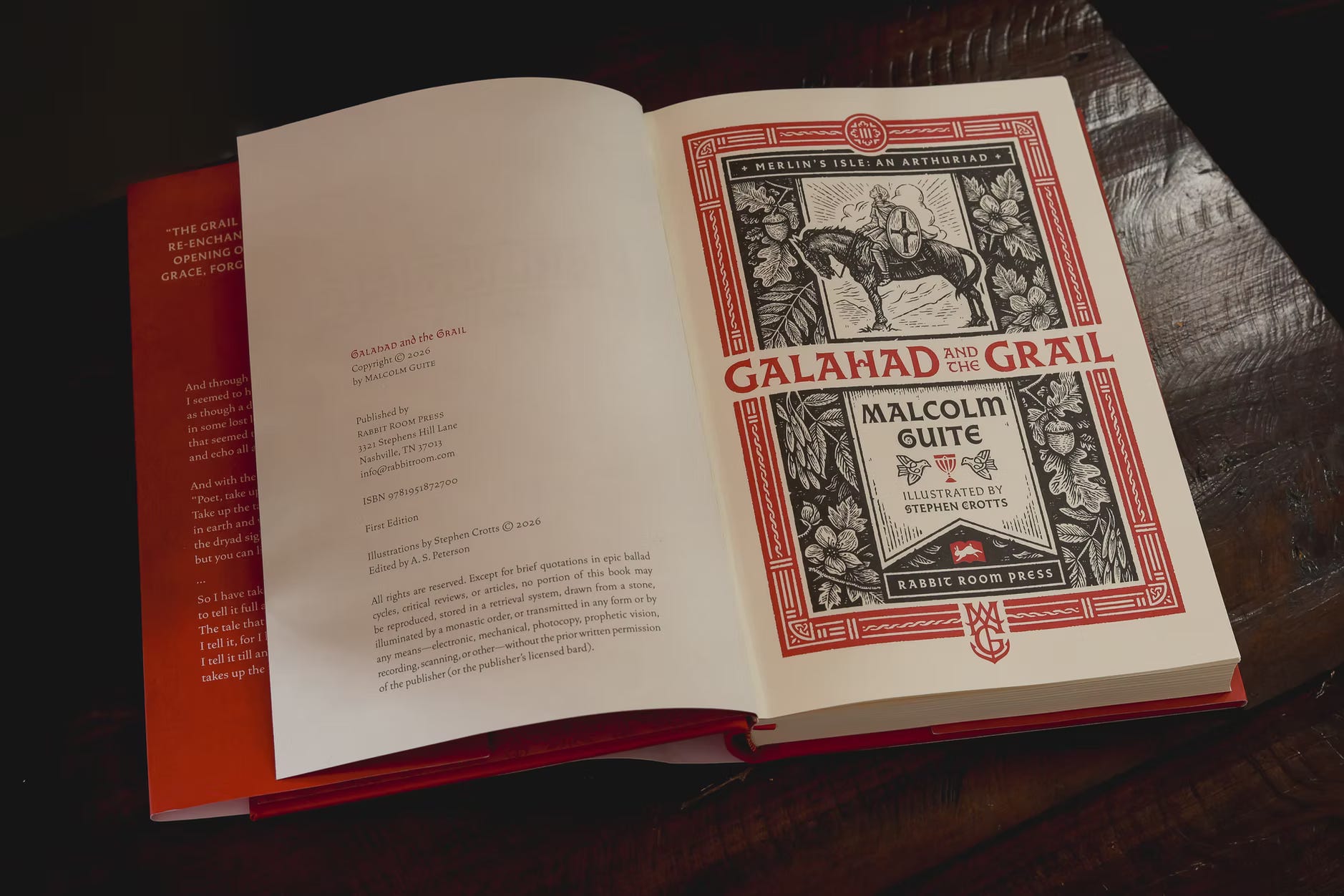
I was hooked from the first page. Not merely is it a beautiful book, from the quality of the binding and the print to the incredible illustrations by Stephen Crotts, but the poetry wasn’t like the half-remembered stuffy stanzas from my school days; this was ballad, this was epic verse, the scale of the story and the beauty of the words melding as one.
Rather than a hindrance, the poetry of Galahad and the Grail is an inspired choice, because the rhyming, rhythmic form of the verse adds whole new depths to the story. Prose can at times be somewhat two-dimensional, compared to, say, music where a composer has so many more tools at her disposal: pitch, tone, etc. But with ballad, a story can be lifted into something closer to that musical register, especially when read aloud. Listen to these opening lines from Galahad and the Grail:3
As I walked out one morning
all in the soft fine rain,
it seemed as though a silver veil
was shining over hill and vale,
as though some lovely long-lost spell
had made all new again.And through that shimmer in the air
I seemed to hear a sound,
as though a distant horn were blown
in some lost land that I had known,
that seemed to speak from tree and stone
and echo all around.And with the music came these words:
“Poet, take up the tale!
Take up the tale this land still keeps,
in earth and water magic sleeps,
the dryad sighs, the naiad weeps,
but you can lift the veil.From where the waves wash Cornwall’s caves
out to the white horse vale,
the lands still hold the tale of old
like hidden treasure, buried gold.
Once more the story must be told.
Poet, take up the tale.Tell of the king who will return,
tell of the Holy Grail,
tell of old knights and chivalry,
tell of the pristine mystery,
of Merlin’s Isle of Gramarye.
Poet, take up the tale.Take up the tale of courtesy,
take up the tale of grace.
Revive the land’s long memory,
summon the fair folk, let them be.
Something of Faerie, wild and free
still lingers in this place.Lift up your eyes to see the light
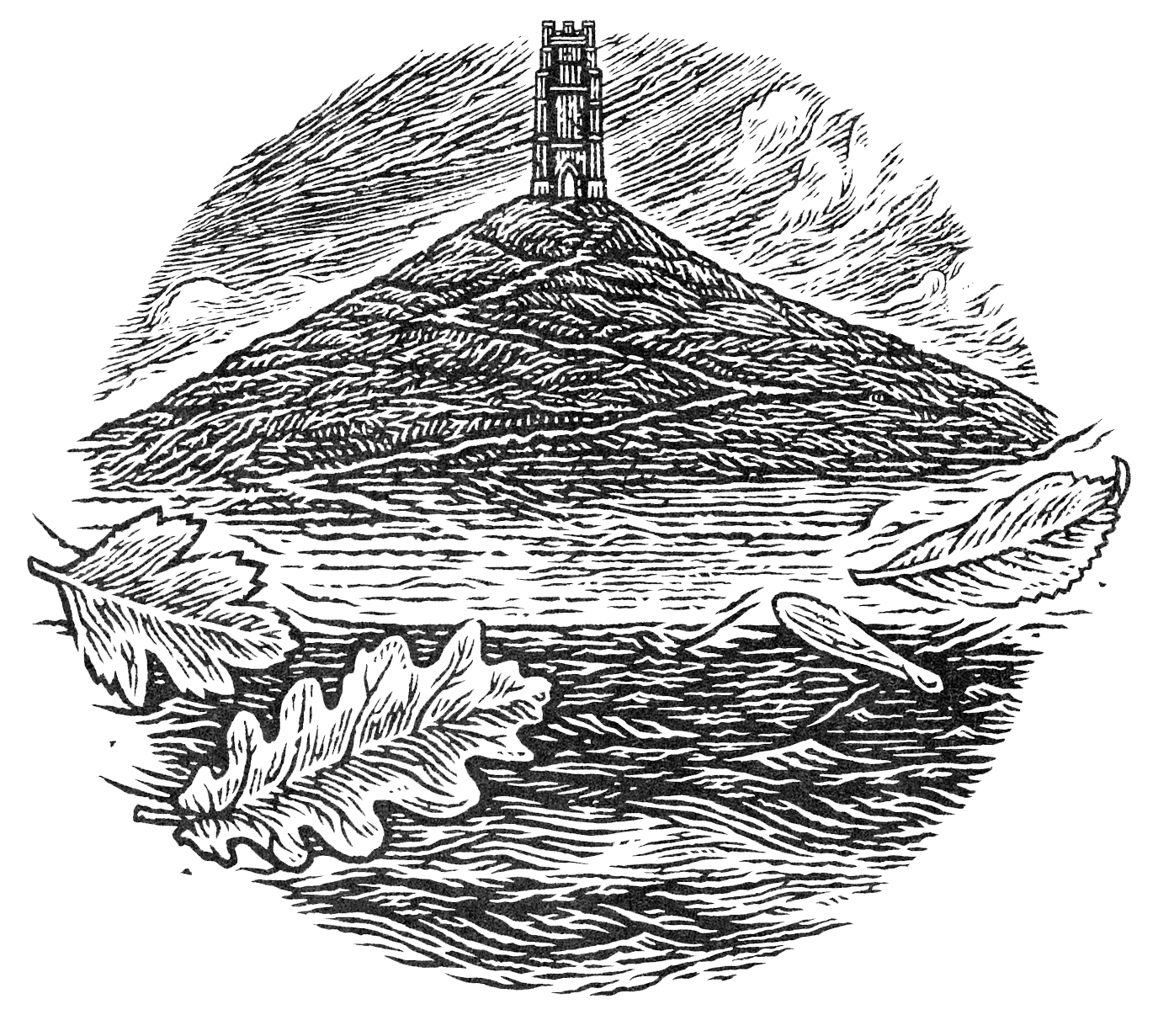
on Glastonbury Tor.
Then come down from that far green hill
to where the sacred waters spill
and shine within the chalice well
and listen to their lore.Yea, listen well before you start,
be still ere you begin.
See through the surface round about—
the noise, the rush, the fear, the doubt.
Though Modern Britain lies without,
fair Logres lives within.You may yet walk through Merlin’s Isle,
by Oak and Ash and Thorn.
The ancient hills do not forget
and you might wake their wisdom yet.
Who knows what wonders might be met
on this midsummer morn.”So I have taken up the tale
to tell it full and free.
The tale that makes my heart rejoice,
I tell it, for I have no choice—
I tell it till another voice
takes up the tale from me.
As you read those words—especially if you read them out loud—you’re immediately drawn into the world that Malcolm is building. There’s also a beautiful nod to the tradition in which he’s writing and retelling the tale, for others—Thomas Malory, Roger Lancelyn Green, T. H. White and more—have told the tale before him. But rather than ignore that, Galahad and the Grail deliberately acknowledges what it is doing, namely standing in a long tradition of storytelling.
There is also some beautiful foreshadowing in those opening lines of where this story will go. Because the story of the grail quest is not some knights-whacking-each-other-with-swords-and-swinging-from-chandeliers Hollywood pastiche. But this is a story about hope and memory, love and loss, pride and arrogance, fall and restoration. A story above all about how God has reached down into the world, both its high places and its wastelands, to offer in Jesus not just an epic idea, because we fall short of those; but himself and his presence.
With Galahad and the Grail, Malcolm Guite has given us a gift—and not just a literary achievement that will, in time I believe, sit up there with the likes of Tolkien and Lewis. But Malcolm has written a book that is incredibly timely because, in a disenchanted world, so many of us need our imaginations rekindling and re-exciting with the idea that this world is saturated in meaning.
For those who are seekers and searchers, longing for meaning and who do not sit happily with shallow claims like “atoms are all there is, live with it!”, Galahad and the Grail will help your spirit soar and point you to a bigger story, beyond grails and knights, but to which those things are signposts. And for Christians: maybe it will lift the veil slightly and remind you that the Christian story is not just about you, Jesus, and a ticket to heaven, but is much bigger, wider, and deeper too; about just how deeply God loves his creation and what lengths he took to rescue it, enter into it, and infuse it with meaning.
If you’re in the USA, you can buy Galahad and the Grail from Rabbit Room Press. In the UK, it is published by Canterbury Press. (And if you wish to help send Jeff Bezos to space, it’s also on Amazon). The audiobook (read by Malcolm) is available on Audible. Finally, Malcolm’s YouTube channel, ‘A Spell in the Library’ is also well worth a visit.
All my writing is free to read. To help keep it free, and support those who can’t afford to pay, please consider a paid subscription. Thank you!
C. S. Lewis, ‘Bluspels and Flalansferes: A Semantic Nightmare’ in Rehabilitations and Other Essays (London: Oxford University Press, 1939), p.157.
Malcolm Guite, Galahad and the Grail (London: Canterbury Press, 2026) p. 315.
Galahad and the Grail, pp.1-3. If you’d like to hear Malcolm read this himself, he narrates the audiobook which can be found here.